
Dumbbells are the most versatile piece of home training equipment: a small pair fits under the bed, yet it lets you train the whole body – legs, glutes, back, chest, shoulders and arms. The choice looks simple, but the wrong weight, an uncomfortable handle or the wrong type soon leaves dumbbells gathering dust in a corner. Below we explain how to choose dumbbells to suit your goal, your level and your home, using real products from our range.
What weight dumbbells should you choose?
The right weight lets you do 8–12 reps with clean technique, with the last two reps genuinely hard. If you can do more than 15 reps, the dumbbell is too light; if your form breaks down before the sixth rep, it is too heavy. Large muscle groups (legs, glutes, back) need a much heavier dumbbell than shoulders and arms, so one weight is rarely enough.
| Exercises | Beginner woman | Beginner man | Experienced (W / M) |
|---|---|---|---|
| Shoulders and arms: lateral raises, biceps and triceps exercises | 1–4 kg | 3–8 kg | 4–8 / 8–14 kg |
| Chest and back: presses, rows | 3–6 kg | 6–12 kg | 6–12 / 14–26 kg |
| Legs and glutes: squats, lunges, Romanian deadlifts | 4–10 kg | 8–16 kg | 10–20 / 20–30+ kg |
These ranges are general starting points, not rules: a lot depends on body weight, training experience and health. In the goblet squat you hold one dumbbell with both hands, so a heavier dumbbell works there.
How to progress: once you can do every set for 12–15 reps with good form, add weight. In small exercises even 1–2 kg is a big step; in leg and back exercises you can add 2.5–5 kg. This is exactly where plate-loaded and adjustable dumbbells beat fixed ones.
Fixed, adjustable or a dumbbell set?
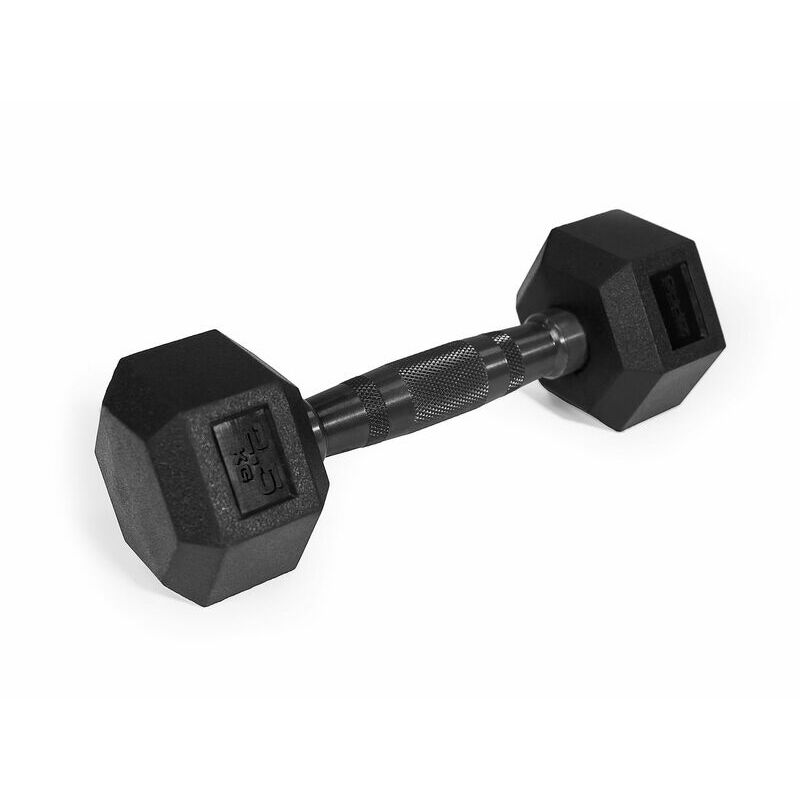
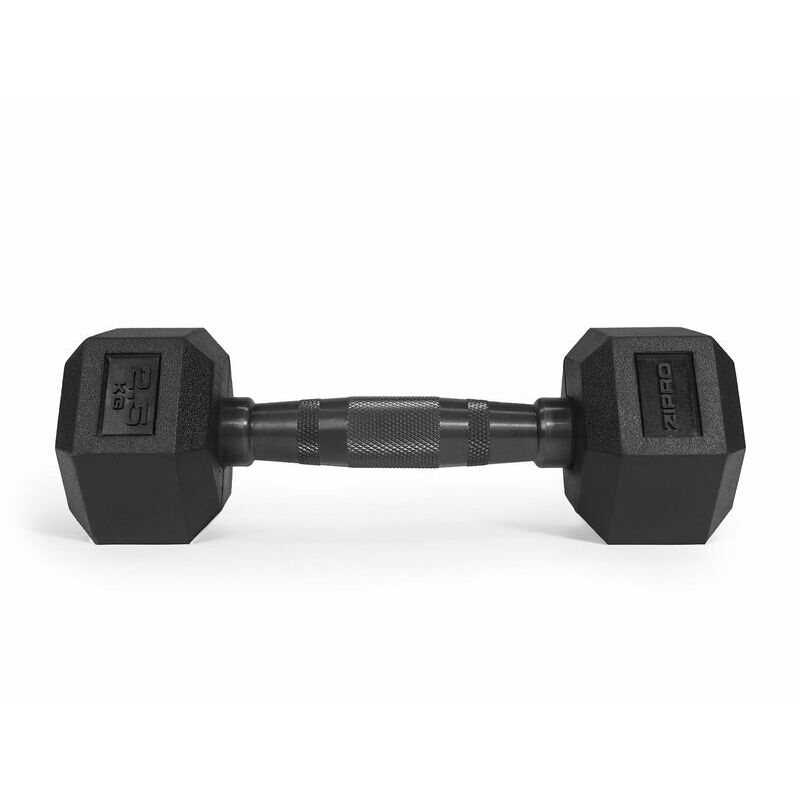
- Fixed dumbbells – one set weight, always ready, nothing rattles and nothing needs tightening. Good for aerobics and quick circuits. The downside: every new weight needs a new pair, so a row of weights costs space and money. For example Tunturi neoprene dumbbells 0.5 kg (pair) or the hexagonal Zipro HEX 2.5 kg.
- Dumbbell set with stand – several fixed pairs plus a holder. The Tunturi Centuri set has 1, 2 and 3 kg pairs and a PVC stand; the hexagonal dumbbells don't roll on the floor. A good choice for light training and beginners, but usually too light for strength work on legs and back.
- Plate-loaded dumbbells – a handle, weight plates and screw collars. You can change the weight in small steps, and the same set grows with you. The Tunturi 10 kg, 15 kg and 20 kg sets have cast-iron plates and a Ø 30 mm handle; the Tunturi 15 kg vinyl set has a Ø 25 mm handle. The downside: changing plates takes time between exercises, and the collars need checking every time.
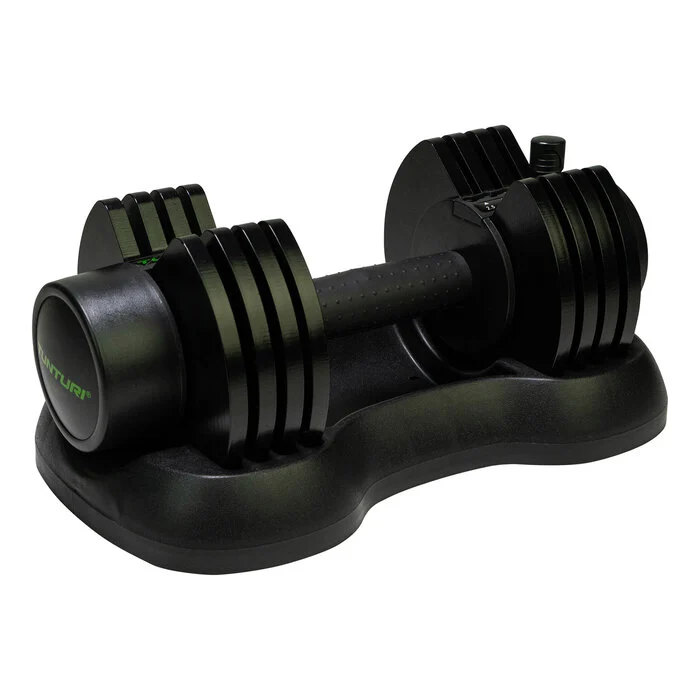
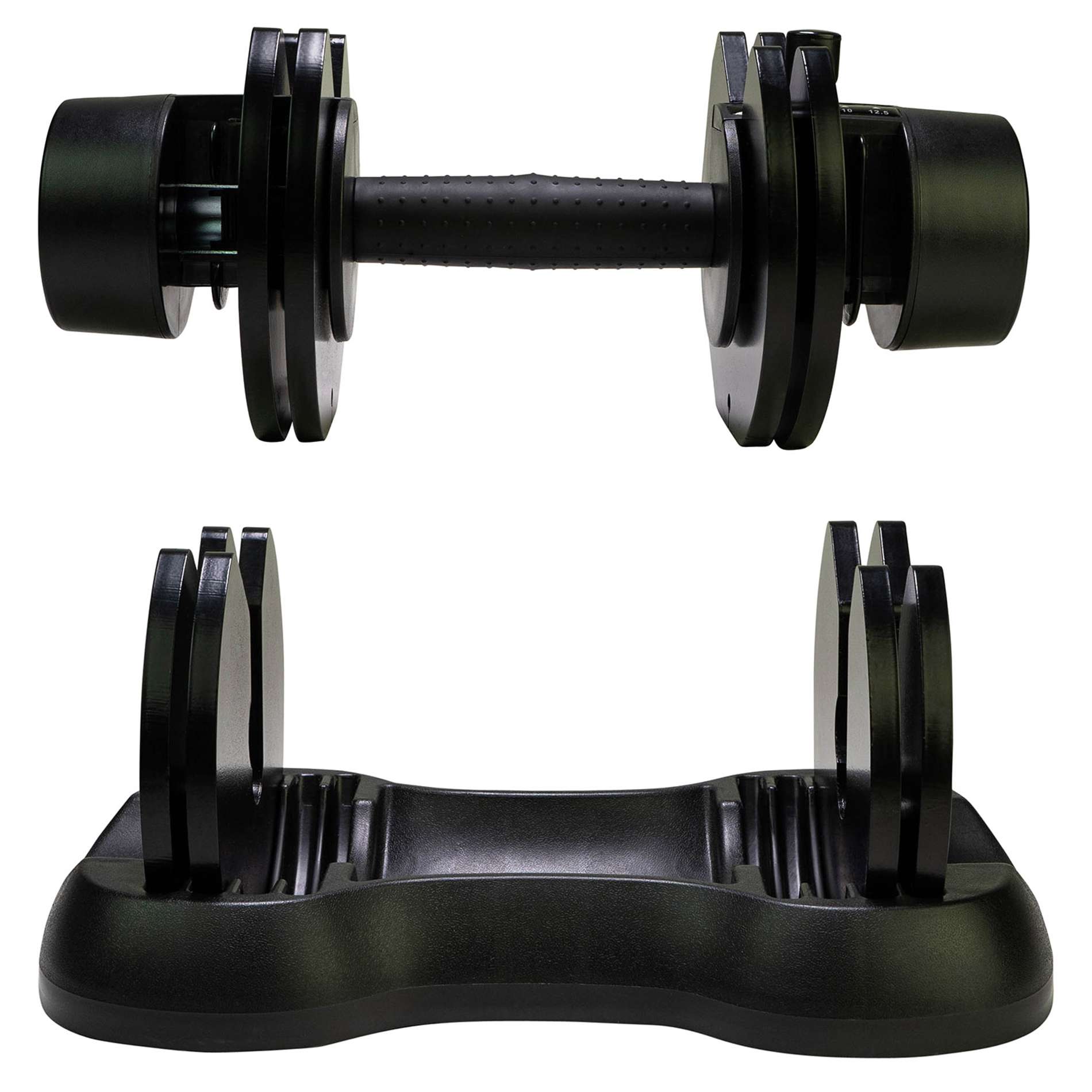
- Adjustable (selector) dumbbells – you pick the weight with a button and the unused plates stay in the base. The Tunturi Selector handle weighs 2.5 kg and plates are added in 2.5 kg steps, so one dumbbell gives you 2.5–12.5 kg. The quickest and most space-saving option, but the price per kilogram is higher.
Rule of thumb: if you mainly train with light weights and want everything ready to hand, choose fixed pairs or a set with a stand. If you want to go heavier over time, choose plate-loaded or adjustable dumbbells. You can also buy a dumbbell handle on its own and use plates you already have with a 30 mm hole – for example the Tunturi 36 cm screw-lock handle, the Rucanor chrome handle, the Gymstick 35 cm handle or the Tunturi banana-shaped chrome handle.
Pair or single? Read the product description: some dumbbells are sold as a pair (for example the 0.5 kg neoprene dumbbells, 2 pcs), others individually. The Tunturi 10 kg plate-loaded set contains one handle and the Selector set one dumbbell – for two-handed training you need two.
Materials: chrome, cast iron, vinyl, neoprene and rubber
- Chrome-plated steel – handles and bars. Durable, easy to clean and good-looking. Smooth chrome can slip in sweaty hands, so a good handle has a knurled or textured surface.
- Cast iron – classic weight plates. Affordable and compact: the largest plate in the Tunturi 20 kg set is only 16 cm across. Cast iron is hard and can mark the floor if dropped; in damp rooms the surface can rust.
- Vinyl – plastic-coated plates. Quieter and kinder to floors, but bigger for the same weight: the largest plate in the Tunturi vinyl set is 24 cm across. Good for beginners and flats.
- Neoprene – light dumbbells with a soft coating. The textured surface grips even with sweaty hands, they don't clank, and each weight is easy to tell apart by colour. Ideal for aerobics, walking and recovery sessions.
- Rubber and hex – rubber-coated or hexagonal dumbbells don't roll away and are kinder to floors. The hex shape also helps in exercises where the dumbbell rests on the floor, such as rows in a plank position.
Protecting the floor: put a rubber mat (10–20 mm) where you train, especially on parquet, laminate or tiles. Don't drop the dumbbells between sets – lower them under control. In a flat, the mat also dampens noise for the neighbours below.
Grip and handle
The handle matters more than you might think: if the dumbbell slips or your grip tires before the muscle, the workout is cut short.
- Surface: a knurled or textured handle holds even in sweaty hands. According to the manufacturer, the steel handle of the Tunturi plate-loaded sets has an anti-slip surface.
- Shape: a straight handle is the all-rounder; the banana-shaped handle is designed for a firmer grip and more stability.
- Collars: screw collars must hold the plates tight. Tighten them before every set – a loose plate can fall on your foot.
- Compatibility: the plate hole has to match the handle. Plates with a 30 mm hole fit a 30 mm handle, 25 mm plates fit a 25 mm handle.
- Grip aids: if your hand tires before the muscle (in Romanian deadlifts, for example), training gloves or lifting straps help.
How many pairs of dumbbells do you need at home?
One pair is usually too few, because legs and back need a heavier load than shoulders and arms. A good start is three weights: light, medium and heavy.
- Beginner woman: for example 2, 4 and 6–8 kg pairs, or one adjustable pair.
- Beginner man: for example 5, 8 and 12 kg pairs, or two plate-loaded sets that can be made up to several weights up to 20 kg.
- Experienced: an adjustable pair or plate-loaded sets with extra plates, because a long row of fixed dumbbells gets expensive and won't fit anywhere.
If you buy plate-loaded sets, get two identical sets for a pair – that way both hands carry the same weight and the plates sit symmetrically on the handle.
Storage
- Dumbbells lying on the floor are a trip hazard, especially with children at home. Keep them on a stand or shelf.
- The Centuri set stand with its dumbbells takes up only 32.8 × 20.3 cm of floor space. The Selector dumbbell measures 35 × 20 × 16 cm and sits in its own base.
- Keep the plates of a plate-loaded set in a box or on a plate holder so they don't roll and the collars don't go missing.
- Store cast-iron and chrome dumbbells in a dry room – a cold, damp garage can cause rust. Wipe off sweat after training.
- Keep the heaviest dumbbells low: they are safer to lift and the shelf won't tip.
Dumbbells or a kettlebell?
A kettlebell is a good addition to dumbbells, not a replacement: it is handy for ballistic exercises such as swings. With dumbbells it is easier to train each arm separately and to choose the weight more precisely. If you already have dumbbells, take a look at our kettlebells too.
Sample home workout: full body in 30 minutes
Train 2–3 times a week with a rest day in between. Warm up for 5 minutes (marching on the spot, arm circles, light squats). Do the exercises back to back, rest 1–2 minutes between rounds and complete 3 rounds in total.
- Goblet squat – 10–12 reps; hold one dumbbell in both hands in front of your chest.
- One-arm row – 10 reps per arm; support the other hand and knee on a chair or bench.
- Floor press – 10–12 reps lying on your back; the floor limits the range of motion and spares the shoulders.
- Romanian deadlift – 10–12 reps; back straight, hips back, dumbbells sliding down along the thighs.
- Overhead press – 8–10 reps seated or standing.
- Reverse lunge – 8 reps per leg.
- Farmer's walk – 30–40 seconds with heavier dumbbells; shoulders down, torso upright.
When the rounds start to feel easy, add reps first and then weight. If you have health problems or joint pain, or are recovering from an injury, ask a doctor or physiotherapist before you start.
How much to spend: price bands
The price of dumbbells depends mainly on the total weight, the material and how quickly you can change the weight.
| Price band | What you get | In our range now |
|---|---|---|
| Under €20 | Light single dumbbells, neoprene pairs and dumbbell handles on their own | Products: 6 · 8,99 €–19,79 € e.g. Dumbbells TUNTURI Neoprene Dumbbells 0.5kg, pink |
| €20–50 | Dumbbell handles and plate-loaded starter sets (cast iron or vinyl) | Products: 2 · 31,46 €–40,94 € e.g. Dumbbell TUNTURI Vinyl Dumbbellset 15kg |
| €50–100 | Larger cast-iron sets up to 20 kg and dumbbell sets with a stand | Products: 3 · 53,91 €–79,64 € e.g. Dumbbell TUNTURI Dumbbell Set 15kg, screw |
| Over €100 | Adjustable dumbbells where you select the weight with a button | Products: 1 · 134,99 €–134,99 € e.g. Adjustable dumbbell TUNTURI Selector Dumbbell 12.5 kg |
Live data from our catalogue (in-stock dumbbells available to order online), 24.11.2026.
All prices include VAT. Compare the price per kilogram: a plate-loaded set is usually the cheapest per kilogram, while with an adjustable dumbbell you pay more for convenience and space saving.
Dumbbell comparison
The table shows the dumbbells, dumbbell sets and dumbbell handle in our range with the manufacturer's data. Check on the product page whether the price is for one dumbbell or a pair.
| Product | Price | Type | Weight | Contents | Material | Handle | Dimensions |
|---|---|---|---|---|---|---|---|
| Dumbbells TUNTURI Neoprene Dumbbells 0.5kg, pink | 8,99 € | fixed, neoprene-coated | 0.5 kg | 2 dumbbells (pair) | cast iron, neoprene | textured surface | 13.6 × 4.7 × 4.2 cm |
| Dumbbell ZIPRO HEX 2.5kg, black | 17,91 € | fixed, hex | 2.5 kg | – | – | non-slip | – |
| Dumbbell set with stand Tunturi Centuri Neoprene Dumbellset 3Prs+Stand | 62,99 € | set with stand, hex | 1, 2 and 3 kg (12.3 kg in total incl. stand) | 3 pairs + PVC stand | cast iron | – | 32.8 × 20.3 × 28.9 cm (stand with dumbbells) |
| Dumbbell TUNTURI Vinyl Dumbbellset 15kg | 31,46 € | plate-loaded, screw collars | 15 kg in total (handle 1 kg) | handle + 6 plates (2 × 3.75, 2 × 2, 2 × 1.25 kg) | vinyl | Ø 25 mm | handle 45 cm, plates up to Ø 24 cm |
| Dumbbell TUNTURI Dumbbellset 10kg, 1 bar | 40,94 € | plate-loaded, screw collars | 10 kg in total | 1 handle + 4 plates (2 × 2.5, 2 × 1.25 kg) | cast iron, steel | anti-slip, Ø 30 mm | handle 35 cm, plates up to Ø 16 cm |
| Dumbbell TUNTURI Dumbbell Set 15kg, screw | 53,91 € | plate-loaded, screw collars | 15 kg in total | handle + 8 plates (2 × 3, 2 × 2, 2 × 1, 2 × 0.5 kg) | cast iron, steel | anti-slip, Ø 30 mm | handle 35 cm, plates up to Ø 16 cm |
| Dumbbell TUNTURI Dumbbell Set 20kg, screw | 79,64 € | plate-loaded, screw collars | 20 kg in total | handle + 6 plates (2 × 5, 2 × 2.5, 2 × 1.25 kg) | cast iron, steel | anti-slip, Ø 30 mm | handle 35 cm, plates up to Ø 16 cm |
| Adjustable dumbbell TUNTURI Selector Dumbbell 12.5 kg | 134,99 € | adjustable (selector) | 2.5–12.5 kg in 2.5 kg steps | 1 dumbbell + base | – | – | 35 × 20 × 16 cm |
| Dumbbell TUNTURI Banana-shaped Chrome bar, 38cm | 19,79 € | dumbbell handle, screw collars | – | handle + 2 screw collars | chrome-plated metal | banana-shaped, Ø 30 mm | 38 cm |
Specifications as stated by the manufacturer; “–” means the manufacturer has not provided this information. Prices as of 24.11.2026.
Summary: what suits whom?
- Light training, aerobics, recovery: neoprene dumbbells or the Centuri set with stand.
- Beginner on a budget: the 15 kg vinyl set or the 10 kg cast-iron set.
- Strength training, growing weights: the 15 kg or 20 kg cast-iron set (two sets for a pair).
- Little space, quick weight changes: the Tunturi Selector 2.5–12.5 kg.






See all dumbbells in our range. We deliver across the entire European Union; the terms for delivery, the 14-day right of withdrawal and complaints are in our terms of sale.